What the research says
Why your hair gets static in winter
In November the heat comes on, and the air at home can get drier than recommended. In dry air, as chemists saw in experiments on hair tresses, the charge from friction drains off hair more slowly. Below we look at why hair gets static in winter and what to do about it.

01The worry
You take off your hat and your hair stands on end
It happens every winter. You take off your hat in the hallway or on the subway, and your hair stands on end, sticks to your face and your scarf, and brushing only makes it crackle more. Year after year people describe it in the same words. They say their hair looks like a dandelion, like antennas, like a halo.
There's plenty of advice out there, and the tips contradict each other. Some people say don't wash your hair before going out, others say touch a radiator, others say spray your hair with anti-static spray for clothes. Many admit that nothing helped them, not conditioners, not oils, not an ionic hair dryer.
We pulled together what research and official recommendations say about dry indoor air and hair care. Where the charge comes from is explained by chemists' experiments on hair tresses. We didn't find any studies on people wearing hats, so throughout the article we point out where the measurements end and the explanation begins.
What people say online
- “I walk into class, take off my hat and it's a DISASTER!!!! How do I tame it?”
- “started wearing a cotton beanie under my hood.. otherwise I'm scared to take the hood off, I look like a scarecrow with my hair standing up”
- “As soon as fall starts, my hair gets super staticky.”
- “Even when I just lie down on my pillow, my hair gets static.”
- “I use oils, masks, conditioners all the time, but nothing helps”
- “Why does this only happen in winter and what do I do about it?”
02The charge
Why your hair gets so staticky
Static electricity is a charge that builds up on an object and doesn't leave it right away. In chemists' experiments, it shows up on hair from friction, mostly when you comb it. In 1977 American chemists described what happens next. Hair picks up a charge, especially in dry air, and hairs with the same charge push each other away. That's how you get "flyaway" hair that's hard to comb and style.
In the same experiments on tresses, the charge was densest at the ends, right where the comb pulls hardest. What the hair rubs against matters too. In other experiments, from 1985, the charge from friction depended on the material touching the hair, and the authors suggested choosing the material of the comb.
Air humidity plays a big role. In the 1977 experiments, both the charge from combing and the time it took to drain off the hair went down as humidity went up. In a 1959 lab experiment, the charge from combing dropped as the air got more humid, and at 85% humidity there was practically none. These are all experiments on tresses in lab instruments, so we don't apply their findings directly to people.
There's no single answer on whether colored and damaged hair gets more static, because the data disagree. A 1991 review by a dermatologist says that a damaged cuticle, the outer scaly layer of the hair, makes hair more prone to static electricity. But in the 1985 experiments, bleaching and coloring changed the charge from friction very little. One thing isn't in dispute. The American Academy of Dermatology, the professional organization of U.S. dermatologists, says damaged hair is brittle, and that's why it breaks.
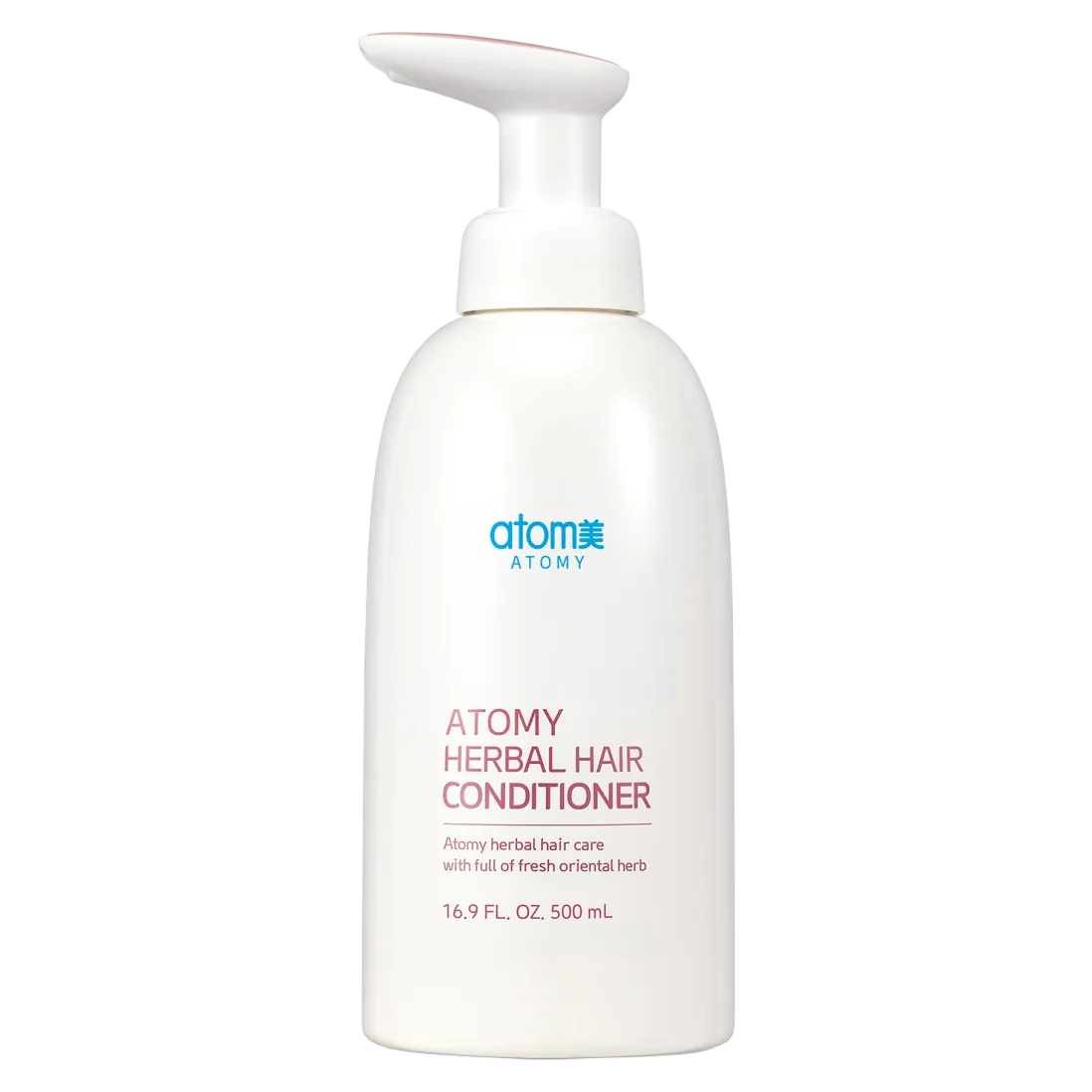
Your hair rubs against your hat and scarf all day, and then you end up brushing it more than once. Our catalog has a conditioner that makes hair easy to comb, wet or dry.
See the conditioner03The air
Why is my hair so static in winter
In winter the air we breathe at home changes. Swedish researchers write that in well-ventilated buildings in Scandinavia, relative humidity in winter is usually 10 to 35%. The U.S. Environmental Protection Agency (EPA) recommends keeping indoor humidity below 60%, ideally between 30 and 50%. So most of that winter range of 10 to 35% falls below this target.
In Sweden, researchers tested what happens when you humidify the air. The study included 104 staff members from four hospital wards in the south of the country. For four months of the heating season, the air in two wards was humidified to 40 to 45%, and in the other two humidity stayed at 25 to 35%. By the end, 24% of staff in the humidified wards felt the air was dry every week, compared with 73% in the regular wards.
For our topic, something else matters more. The wards also had instruments measuring static electricity. With humidification, the staff's exposure to it went down noticeably. Hair wasn't measured in this study, so you can't carry the finding straight over to your hairstyle. But it lines up with the chemists' experiments on tresses, where the charge dropped as humidity rose.
Something similar was seen in Helsinki. In an office building, one wing was humidified to 30 to 40%, and in the other humidity stayed natural, at 20 to 30%. Among 211 workers, overall complaints of dryness were lower during the humidified periods.
Dry air affects your skin too. This was tested at the research center of Shiseido, a Japanese cosmetics company. After just three hours in dry air, the top layer of the skin held noticeably less water at both spots where it was measured.
While the air at home is dry, you may want to choose your after-wash care more carefully. The conditioner in our catalog has herbal complexes that bring various, rich nutrients to your hair and scalp.
See the conditioner04Conditioner
Does conditioner help static hair
A lot of people think conditioner is optional. The American Academy of Dermatology recommends using conditioner after you wash your hair. It says conditioner moisturizes and detangles hair and makes it easier to care for. If your hair is dry or curly, the academy recommends applying it along the whole length.
Cosmetic chemists explain how conditioner is connected to static. A 2015 review says that strong cleansing ingredients in shampoo are good at washing away sebum and dirt, but they can increase the negative charge, frizz and friction on the hair. Conditioners, according to the same review, add positive charges to the hair, neutralize its negative charge and lubricate the cuticle. And there's less "flyaway" hair when the hair surface is lubricated.
Lubrication may even matter more than the positive charge itself. In 1977, researchers at the American chemical company American Cyanamid concluded that quaternary antistatic agents, meaning positively charged substances, work mainly as lubricants. Less combing force means less charge on the hair. In a 1959 experiment, after a rinse with a cationic, meaning positively charged, substance, the charge on tresses during combing became much lower. The experiment was done in a lab instrument on four hair samples, and two of them were rinsed with the cationic substance.
The 2015 review calls silicone the most effective and most widely used conditioning ingredient. Many people are wary of silicones. We go over what's known about them below, in the myths.
We looked at the ingredients of the conditioner in our catalog. It has a cationic polymer and a silicone complex that prevent tangling and static. Its pH, the measure of acidity, is 6.0 to 7.0.
See the conditioner05Brushing
How to brush your hair when it's full of static
When your hair stands on end, you reach for a brush without thinking. But according to chemists' experiments, combing is exactly where the charge comes from, and at the ends it may be tied to one more problem we cover below.
The American Academy of Dermatology calls the advice to give your hair 100 brush strokes a day a myth. It says you should brush and comb your hair only to style it, and work out tangles gently, with a moisturizing conditioner if needed.
Wet hair, dermatologists write, is fragile. Detangle it with a wide-tooth comb, not a brush. Comb the ends slowly first, then work your way up, and your hair gets less damaged.
Researchers even counted the short broken-off pieces of hair left behind after combing. In a 2007 experiment on tresses, there were more of them as combing damaged the ends, and conditioner reduced them. The authors think the short pieces come from the ends curling back by inertia and possibly from static charge. That's the authors' suggestion, not a measurement.
We didn't find studies on which hat fabric causes less static in hair. So there's no advice on hat fabric in this article.
Gentle brushing is easier when your hair doesn't tangle. Apply the conditioner from our catalog after shampoo, from the ends to the center of your hair, then rinse thoroughly with lukewarm water.
See the conditioner06Myths
Skipping a wash and other static hair tips
- Myth
Dry hair conducts electricity well, and that's why it gives you a shock
FactChemists' experiments point the other way. On tresses, both the charge from combing and the time it took to drain off the hair went down as air humidity went up. That means in dry air the charge stays on the hair longer. In the Swedish hospitals, instruments showed less static electricity after humidification, but hair wasn't measured there.
Source 01 - Myth
Clean hair gets static, so it's better not to wash it before going out
FactThere's some truth to this. According to a review by cosmetic chemists, strong cleansing shampoos strip oil from the hair and make it pick up a charge more easily, while lubricated hair flies away less. The American Academy of Dermatology doesn't write about static, but it recommends using conditioner after every wash.
Source 06 - See the conditioner
- Myth
Silicones in conditioner are bad for you
FactIn the U.S., the Cosmetic Ingredient Review (CIR) Expert Panel assesses the safety of cosmetic ingredients and works under the cosmetics industry's trade association. It found cyclic silicones safe in the ways and amounts they're used today. They're absorbed through the skin only minimally, and the data don't point to irritation or allergy. The debate is about something else. A 2025 review says that water-insoluble silicones can build up on hair, and if you wash them off too often with strong cleansers, your hair can dry out.
Source 13 - Myth
A humidifier is a waste of money
FactThe U.S. EPA names 30 to 50% as a target for indoor humidity. In the Swedish hospitals where the air was humidified to 40 to 45%, staff complained about dryness less often, and instruments showed less static electricity. Hair wasn't measured in this study, and a hospital isn't an apartment.
Source 02
If silicones on the label make you hesitate, here's why they're in this conditioner. A silicone complex and hair coating ingredients smooth the cuticles, so your hair is easy to manage.
See the conditioner07What to do
How to make your hair less staticky
Keep humidity at home around 30 to 50%
The U.S. EPA names 30 to 50% as a target for indoor humidity. In the Swedish hospitals, instruments showed less static electricity when humidity was raised to 40 to 45%.
Use conditioner after you wash your hair
The American Academy of Dermatology recommends using conditioner after every wash, and applying it along the whole length if your hair is dry or curly.
Detangle wet hair with a wide-tooth comb
Wet hair is fragile. Dermatologists recommend detangling it slowly with a wide-tooth comb instead of a brush, starting at the ends.
Don't try to brush the static out
The American Academy of Dermatology calls 100 brush strokes a day a myth. Brush your hair only to style it, and work out tangles gently.
08Sources
What the sources actually say
In winter, relative humidity in well-ventilated buildings in Scandinavia is usually 10 to 35%. 104 staff members of four geriatric wards in southern Sweden; humidification raised humidity to 40 to 45% in two wards for four months, and the other two were controls with humidity of 25 to 35%. Humidification reduced the sensation of dry air, static electricity and airway symptoms the most. Weekly sensation of dryness was reported by 24% in the humidified wards versus 73% in the control wards. Instruments measured humidity and static electricity, among other things; humidification noticeably reduced the measured exposure of people to static electricity.
Indoor relative humidity should be kept below 60%, ideally between 30 and 50%, if possible.
290 workers of the Pasila office center in Helsinki, crossover trial; one wing was humidified to 30 to 40%, the other had natural humidity of 20 to 30%. 211 people were included in the analysis. The overall dryness symptom score was significantly lower during the humidification period.
Water content of the stratum corneum at both sites dropped significantly after 3 and 6 hours in a low-humidity environment. The authors are from the Shiseido Research Center, Japan.
- See the conditioner
Use conditioner after you wash your hair. Conditioner moisturizes and detangles hair and makes it easier to care for. If your hair is dry or curly, apply conditioner along the whole length. Wet hair is fragile, so detangle it with a wide-tooth comb, not a brush; slowly comb the ends first, then work your way up, which causes less damage.
Damaged hair is brittle, so it breaks. Hair never needs 100 brush strokes a day. That's a myth. Brush and comb your hair only to style it. Work out tangles gently, with a moisturizing conditioner if needed. Use conditioner after every wash.
Review. Anionic surfactants remove sebum and dirt well, but they can increase the negative charge on the hair surface, frizz and friction. Strong cleansing shampoos remove surface oil and increase chargeability; there is less "flyaway" hair when the hair surface is lubricated and static charge is reduced. Conditioners neutralize the hair's negative charge by adding positive charges and lubricate the cuticle. Silicone is the most active and most widely used conditioning agent.
Lab experiments on tresses. Problems arise from static charge on combed hair, especially at low humidity; hairs repel each other, causing "flyaway", and hair is hard to comb and style. Charge density is highest at the ends, where combing force peaks. Quaternary antistatic agents substantially reduce the charge and work mainly as lubricants: less combing force, less charge. Both the combing charge and the time it takes to drain off decrease as relative humidity rises. The authors were researchers at the chemical company American Cyanamid.
- See the conditioner
Experiment in a lab instrument. In the middle range of humidity, the charge decreased linearly as relative humidity rose; at 85% there was practically no charge. Two of the four hair samples were rinsed with a cationic substance solution after shampooing; at 40% humidity their charge was 95% lower. The authors were from County Laboratories, an industrial lab.
Lab experiments. Deposition of quaternary ammonium salts and cationic polymers lowered the electrochemical potential of the hair surface; bleaching, perming and oxidative dyeing had little effect on triboelectric charging. Static charge buildup can be suppressed by reducing the difference between the hair and the material it touches, by choosing the comb material or by modifying the hair surface. The authors were from Clairol Research Laboratories.
Review. External damage to the cuticle makes hair susceptible to static electricity and humidity; the hair is harder to style and loses its shine.
Lab experiment on tresses. Short breaks increase as combing damages the ends; bleaching increased breakage, and conditioner reduced it. Short breaks come from ends curling back by inertia and possibly from static charge.
- See the conditioner
Skin absorption of cyclic silicones is minimal; the available data do not point to skin irritation or allergy. The CIR Expert Panel concluded that these ingredients are safe in the present practices of use and concentration.
Review. Silicones form a film on the hair shaft, reduce friction and add shine. Water-insoluble silicones can build up on hair; removing them takes stronger cleansing agents, and too much cleansing can dry hair out.
09Products
Hair conditioner from our catalog
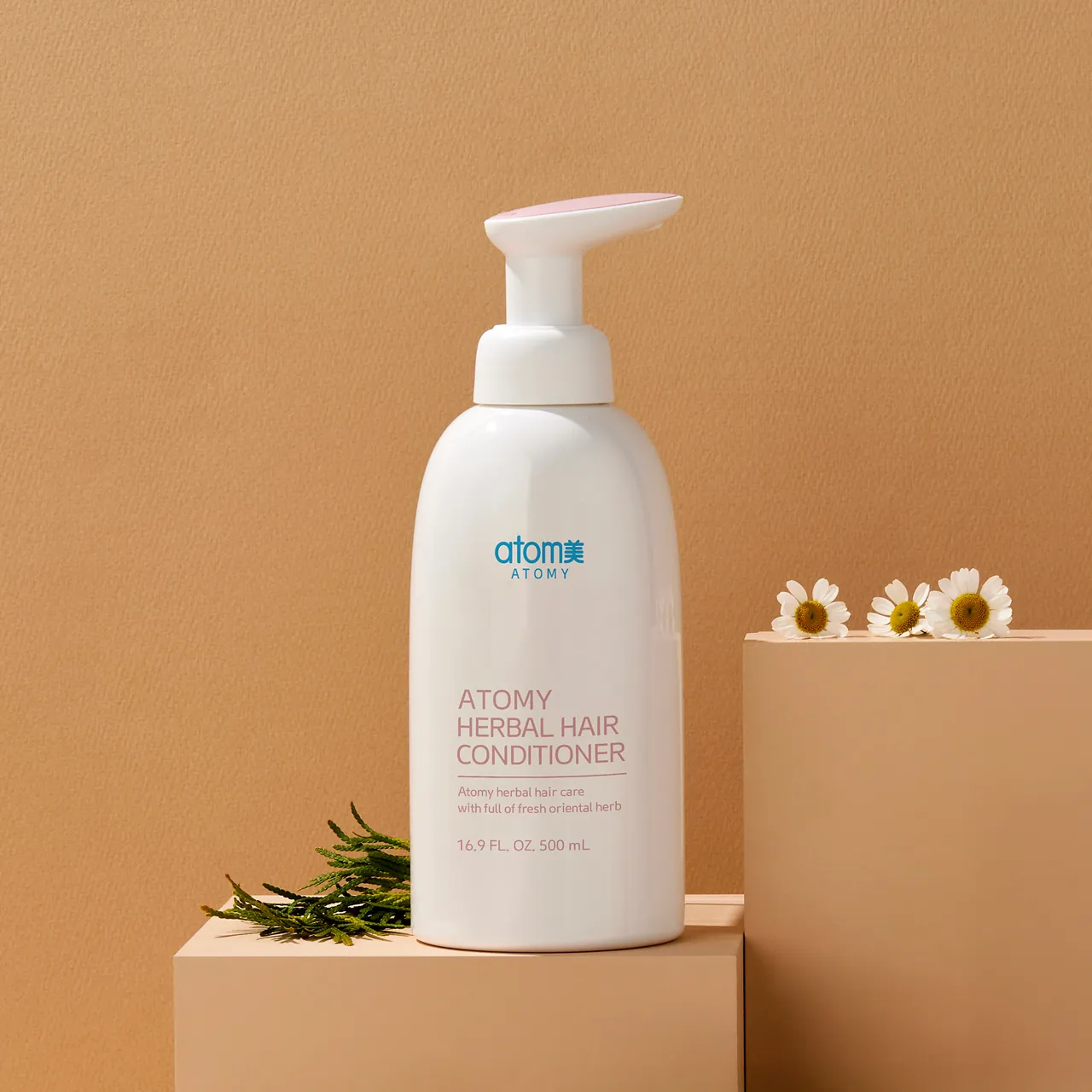 R00661
Atomy Herbal Hair Conditioner
A conditioner with Sangmodan and 16 herbal extracts for comfortable brushing, firmer and shinier hair, and a mildly acidic pH balance.
Description from the product page on us.atomy.com
Learn more
10Sign up
If you decide to buy, choose the country where you live
Sign-up and purchase happen on the Atomy website; we do not sell products, and Yandex Metrica counts visits only if you agree.