What the research says
Your towels smell musty after washing. Scientists link this smell to bacteria that survive washing and drying
Below we look at why towels smell after washing, what temperature to wash them at, and how to get the musty smell out of your towels and your washing machine.
01The problem
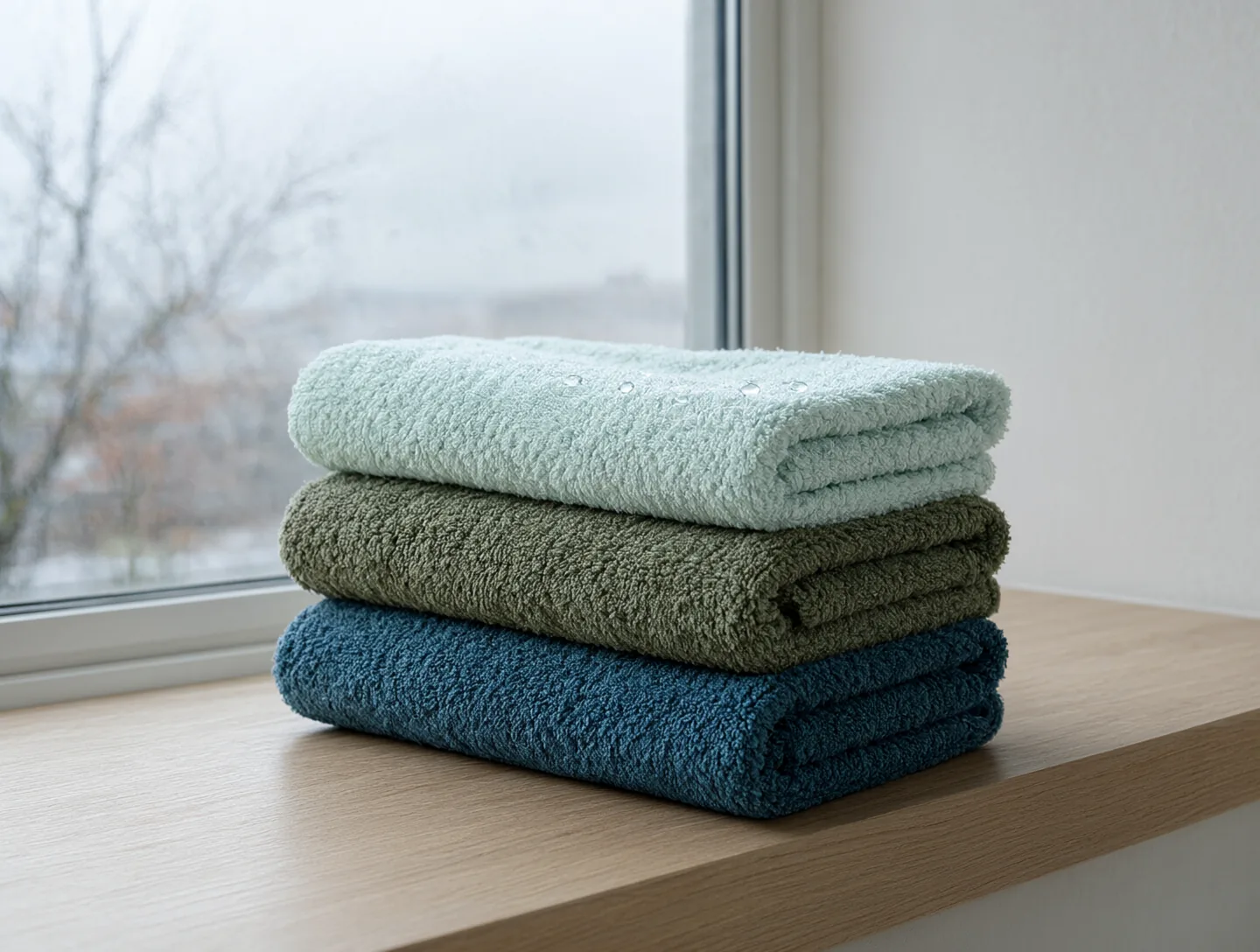
The towel is clean, but as soon as it gets wet, it smells like a damp rag
In November, more and more people dry their laundry indoors. It's damp and cold outside, nothing dries out there, and a towel hangs in the bathroom or on a drying rack in the room longer than it does in summer.
That's when the familiar smell shows up. The towel just came out of the washer and smells like detergent, but as soon as you dry off with it, the damp fabric gives off a musty, sour or stale smell. People wash their towels more often, switch detergents, add fabric softener, and the smell keeps coming back.
Japanese scientists at Kao, a company that makes cleaning products, studied this smell. They write that many people in Japan notice a bad smell from laundry dried indoors, or when they use laundry that has already dried. They describe it as the smell of a wet, dirty rag, or as a sour, sweaty smell.
People usually blame the detergent, the washer or the towel itself. The Japanese scientists linked the smell to a bacterium that lives in laundry and may even survive drying.
What people say online
- “Some of my old towels smell musty even after I wash them and iron them... How do I get rid of that smell?”
- “They're fine when they're dry, but once they get wet they have this nasty musty smell.”
- “Right after the wash they smell like detergent, but once they dry and sit for a bit, they start to smell bad.”
- “And I wash them all the time.. I don't leave them in the bathroom after I use them.., I always dry them.. I'm about to lose my mind...”
02Where it comes from
Where the musty smell in towels comes from
The Kao scientists identified the main microbes linked to this smell, and one of them was the bacterium Moraxella osloensis. The main odor compound in this smell is 4-methyl-3-hexenoic acid, or 4M3H for short, and this bacterium can make it right in the laundry.
This bacterium has one unpleasant trait. It handles drying out and UV light well, and the authors see this as one possible reason it survives in laundry during drying and even after it.
Another study from the same company showed where the bacteria hide. For six months, its staff followed towels in 26 Japanese families. In each family, three towels were used and washed as usual, and three others were only washed along with them. After 2 months, the towels that were used already smelled and looked dull.
Under the microscope, they found biofilm on them, a community of bacteria that grow together and stick to each other. It wasn't in the fluffy loops of the pile but in the base of the fabric hidden underneath them. Over time, the towels had more proteins, sugars, DNA and live bacteria, and a sebum smell (sebum is the skin's natural oil) was found on almost all the towels at every point. The authors conclude that washing may not fully remove sebum.
Still, scientists don't have the full picture of the smell yet. In another study, 15 compounds that had earlier been linked to laundry smell were tested in cotton, polyester and terry cloth, and the strength of the smell didn't match any of them. So Moraxella osloensis remains the main example, not the only cause.
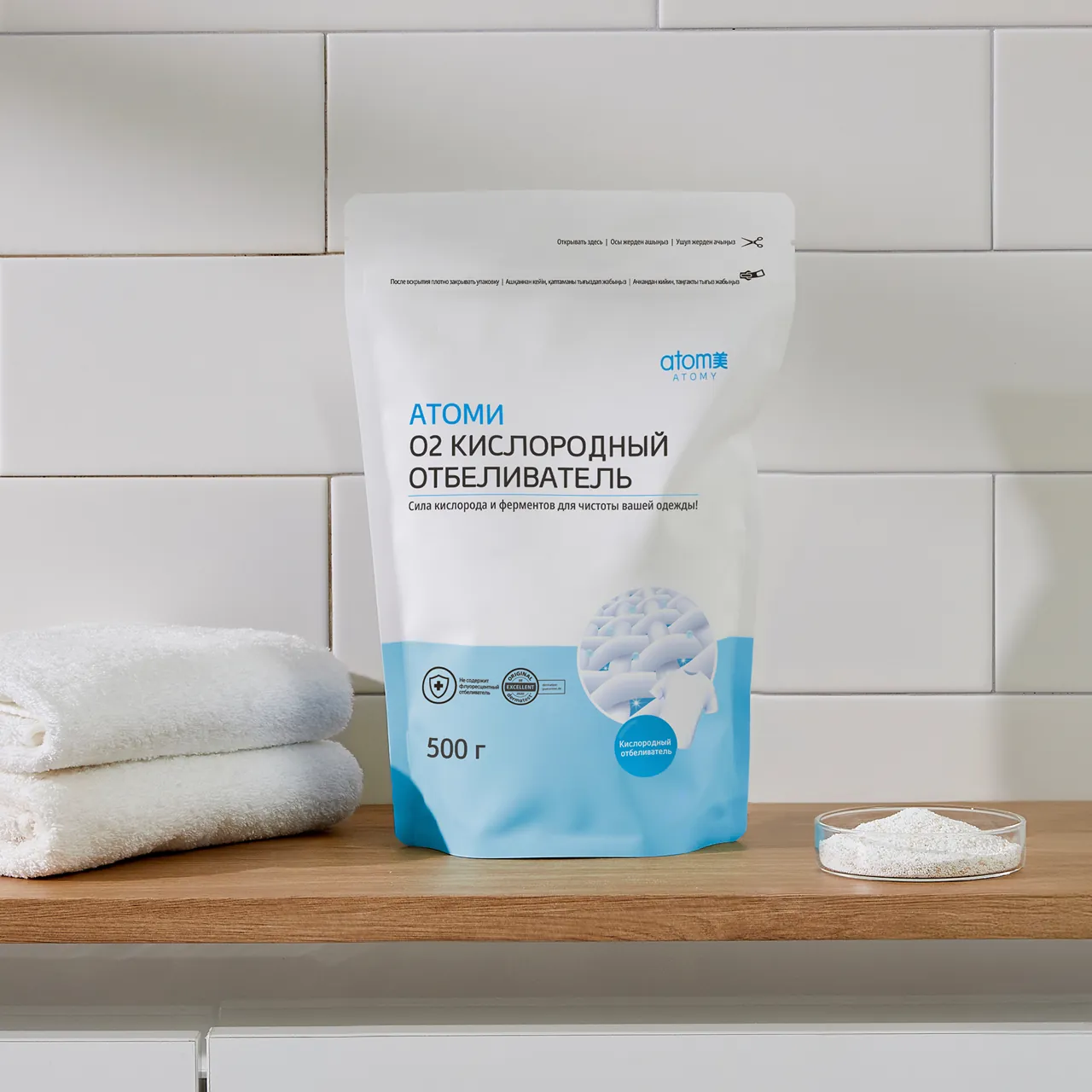
For tough stains and bright fabrics, our catalog has an oxygen bleach. Its ingredients and directions are on its page.
See the oxygen bleach03Washing
Why towels still smell even after washing
It seems like washing rinses away bacteria along with the dirt. Belgian scientists who studied how microbes move around in five home washing machines point out in the first lines of their paper that home washers clean dirty clothes but don't sterilize them.
The machines in this study washed at 30 °C, and the water draining out usually had at least as many live bacteria as the water coming in. The authors write that this way, odor-causing microbes can spread to other clothes.
An experiment with 31 participants in Belgium shows this even more clearly. People wore synthetic T-shirts for two days, then washed them in their own machines on the setting closest to 30 °C, for about an hour. The study was paid for by Givaudan, a company that makes fragrances, including for laundry products.
After washing, the T-shirts had fewer known odor compounds but more live bacteria. Skin bacteria were replaced by bacteria from the washing machine. The experiment was done on T-shirts, not towels, so you can't apply it one to one.
Something similar was seen in Japan on fabrics from people's homes. Employees of Panasonic, a company that makes washing machines, took part in this study. Detergents with and without antimicrobial additives removed microbes only partly, and in almost every family more than 20% of cells survived even washing and drying.
04Temperature
What temperature to wash towels at when the 60 °C setting doesn't reach 60 in the drum
The usual advice for a smell is to wash hotter. But the number on the washer dial and the temperature in the drum don't always match.
The International Scientific Forum on Home Hygiene (IFH), a British scientific organization, gives these figures. On 60 °C programs, the highest temperature in the machines was about 46–53 °C, and on 40 °C programs about 35–39 °C. The IFH also cites a 2013 British report by Which?, which found that about two thirds of home washers in the UK didn't reach that temperature on the 60 setting.
Another study measured the wash temperature in six home washing machines. On quick 60 °C cycles, half the machines didn't reach the stated 60 °C, and the measured temperature ranged from 19.7 to 44.5 °C. The study was done by De Montfort University in the UK with the help of a laundry industry association.
So what temperature should you wash towels at? The IFH advises washing towels, bed linens and underwear at 30–40 °C (86–104 °F), but with a detergent based on activated oxygen bleach and on a standard cycle, not a quick or eco cycle, with two or, better, three rinses. The IFH advises always washing kitchen towels and cloths at 60 °C (140 °F) or higher, also with this kind of detergent.
At a low temperature, washing becomes less hygienic, but you can make up for that. In a lab experiment by German scientists, paid for by washing machine makers, cotton swatches with microbes were washed at different temperatures. A detergent with activated oxygen bleach made the wash more hygienic even at the lowest of them, except for one fungus it barely affected. The second way to make up for the loss is a longer wash. This was an experiment with microbes on swatches, and it says nothing about towel smell.
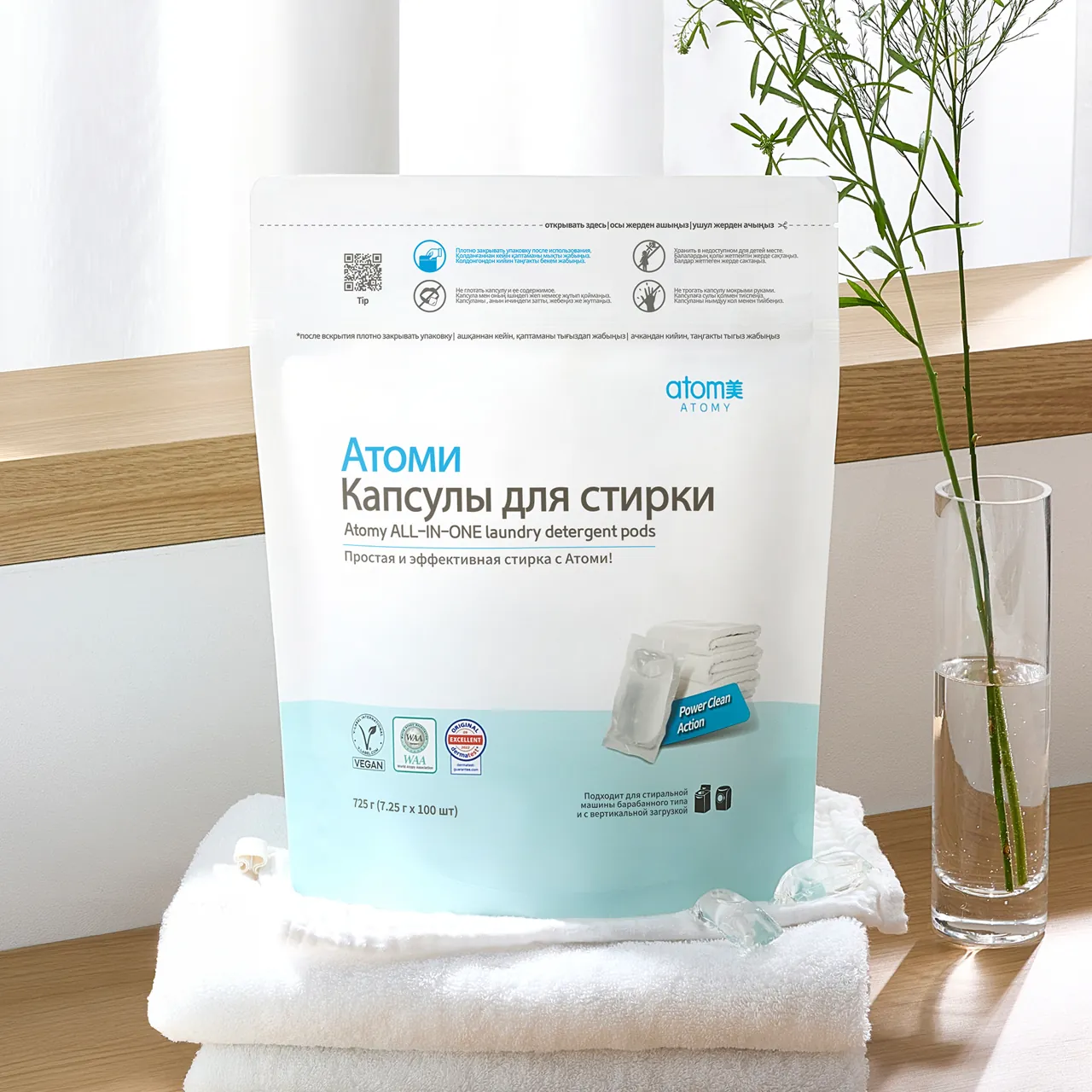
We looked at the laundry pods with seven kinds of enzymes from our catalog separately. One pod is enough for a small load, and fabric comes out softer.
See the laundry pods05The washer
Why your washing machine smells and collects bacteria itself
Odor bacteria don't live only in towels. German scientists studied the bacteria in 13 home washing machines, and an employee of Henkel, a company that makes cleaning products, took part in the study. Bacteria closely related to Moraxella osloensis were found in samples from the rubber door seal (up to 9 samples), in fibers from the wash water (up to 8) and in the drain (up to 6).
The same group counted how many bacteria were there in 10 machines. The detergent drawer and the door seal had on average about 21,000 colony-forming units per square centimeter, meaning live bacteria that can grow into a colony. The fewest were found in the upper part of the seal, probably because it's less damp there.
Front-loading machines, where the door is in front, had significantly more microbes than top-loading machines. That's what a study of 10 machines in the US found, and three of its authors work at Reckitt, a company that makes cleaning and disinfecting products.
The IFH names a condition in which microbes build up in a washer especially often. Films of bacteria and fungi collect in machines that only ever wash at 30–40 °C with a detergent without activated oxygen bleach. In Slovenia, fungi were found in 79% of 70 home washing machines that were checked.
But this isn't simple either. In 16 machines that their owners themselves sorted into smelly and not smelly, the bacteria were almost the same, and the authors think the difference may be in how active the bacteria are or in how a person senses the smell. And in the study of 13 German machines, more hot washes a month, unexpectedly, came with more kinds of microbes in the detergent drawer.
06Drying
In damp warmth the smell comes back, so drying is what matters
In the Belgian experiment where 31 participants wore and washed synthetic T-shirts, the most important thing happened after the wash. Some T-shirts were dried in dry air, at 24.5 °C and 50% humidity, and some in damp air, at 31.8 °C and 80% humidity.
In dry air, the strength of the smell went down significantly. In damp warmth, the smell got much stronger and less pleasant, and some of the odor acids were found in as many T-shirts as before washing. The authors suggest that these acids form again during damp drying.
In the Japanese study of towels in 26 families, the first towel samples were also collected in hot, humid July, when, according to the authors, the wet dirty rag smell often shows up in Japan. November weather is different, but laundry often dries indoors and takes longer to dry than in summer.
The IFH advises drying laundry as soon as possible after washing. Both the IFH and a leaflet from Royal United Hospitals Bath, an NHS hospital in the UK, on washing a patient's laundry at home advise not leaving laundry damp for long, for example in the washer overnight, because the microbes that are left can multiply quickly. The IFH adds that these include harmless microbes that give fabric a bad smell.
Studies disagree on whether a dryer helps. The IFH calls tumble drying at 40 °C or higher an extra margin of hygiene, but in a footnote to the same passage it doesn't recommend it for hygiene because it's bad for the environment. In the study of 10 machines in the US, the dryer didn't significantly lower the number of microbes. That's why we don't recommend a dryer as the fix.
The oxygen bleach in our catalog uses oxygen and 5 enzymes to lift tough stains and keep fabrics bright. The 500 g bag comes with a 40 g measuring scoop.
See the oxygen bleach07Myths
What's actually known about vinegar, baking soda, fabric softener and boiling
- Myth
Vinegar, baking soda or citric acid gets the smell out of towels
FactWe didn't find experiments that tested vinegar, baking soda or citric acid on towel smell, so we neither recommend them nor rule them out. They aren't in the IFH advice for towels, which is washing at 30–40 °C with a detergent based on activated oxygen bleach on a regular cycle. That's advice about a type of detergent, not a specific product.
Source 07 - Myth
Fabric softener will make towels fresh again
FactWe didn't find studies where fabric softener got rid of towel smell. In a Slovenian study of 70 home washing machines, the analysis named detergents and fabric softeners as the most important factors for fungi in the machine, followed by wash temperature. That's a finding about the machine, not about the towels themselves.
Source 13 - See the laundry pods
- Myth
The smell will only go away if you boil the towels
FactWe didn't find experiments with boiling towels. For regular towels, the IFH advises 30–40 °C with a detergent based on activated oxygen bleach, and keeps 60 °C and higher for kitchen towels and cloths. In the study of 13 German machines, more hot washes a month, unexpectedly, came with more kinds of microbes in the detergent drawer.
Source 07 - Myth
The towel smells because it's imported and heavily dyed
FactWe didn't find comparisons of towels from different countries or with different dyes. And in the Kao study, towels started to smell after just 2 months of use, and the bacterial film sat in the base of the fabric under the pile.
Source 02 - See the oxygen bleach
- Myth
If a washer smells, it definitely has more bacteria
FactIn 16 machines that their owners sorted into smelly and not smelly, only a few significant differences in the bacteria were found. The authors think the smell may depend on how active the bacteria are or on how a person senses it.
Source 14
08What to do
How to get the smell out of towels, step by step
Don't put a wet towel in the hamper
The IFH advises never putting wet items in the laundry hamper.
Wash towels at 30–40 °C on a regular cycle
For towels, the IFH advises a detergent based on activated oxygen bleach and a standard cycle, not a quick or eco cycle, with two or, better, three rinses. 30–40 °C is 86–104 °F.
Wash kitchen towels at 60 °C or higher
That's how the IFH advises washing kitchen towels and cloths, also with a detergent based on activated oxygen bleach. 60 °C is 140 °F.
Take laundry out right away and dry it
The IFH advises drying laundry as soon as possible, and both the IFH and the Bath hospital leaflet on washing a patient's laundry advise not leaving it damp in the washer overnight.
Leave the door and the drawer open
This lets the inside of the machine dry out, the IFH writes. The IFH advises rinsing and cleaning the detergent drawer once a week.
Run the empty washer on a hot cycle once a week
The IFH advises doing this once a week or every fifth wash, on the hottest cycle the manual allows, the longest one and with the highest dose of detergent. The Bath hospital leaflet on washing a patient's laundry says to run the empty washer at least once a week at 60–95 °C (140–203 °F) with detergent.
09Sources
What the sources actually say
Many people in Japan notice a bad smell from laundry dried indoors, or when they use laundry that has already dried. This smell is often described as the smell of a wet, dirty rag or as a sour, sweaty smell. The main compound of the smell is 4-methyl-3-hexenoic acid (4M3H), and M. osloensis can produce 4M3H in laundry. The bacterium tolerates drying and UV light well, which may be why it survives in laundry during drying and even after it.
Six months of follow-up in 26 families: three towels were used and washed, three were only washed along with them. After 2 months of use, the towels smelled and looked dull. Biofilms were seen mainly in the base of the towel, hidden under the pile loops, with no clusters in the loops. Polysaccharides, proteins, nucleic acids and live bacteria increased over time. A sebum smell was found on almost all towels at every point, so sebum may not be fully removed by washing. The first samples were collected in July, when Japan is hot and humid.
Fifteen volatile compounds previously linked to laundry smell were studied in cotton, polyester and terry cloth. The strength of the smell wasn't linked to any of the compounds found.
Home washing machines clean dirty clothes but don't sterilize them. Five home machines, 30 °C program: the draining water usually had at least as many live bacteria as the incoming water, and odor-causing microbes can spread to other clothes.
- See the laundry pods
31 participants, synthetic T-shirts after 48 hours of wear, washed on the setting closest to 30 °C for about an hour. Washing lowers the number of known odor compounds, but the number of live bacteria on the clothes goes up, as skin bacteria are replaced by washing machine bacteria. Dry drying (24.5 °C, 50% humidity) significantly lowered the strength of the smell, and damp drying (31.8 °C, 80% humidity) greatly increased the bad smell. After damp drying, 2- and 3-methylbutanoic acids were found in as many T-shirts as before washing. The study was funded by Givaudan UK.
Detergents with and without antimicrobial additives removed microbes only partly, and in almost every family more than 20% of cells survived even washing and drying.
Towels, bed linens and underwear should be washed at 30–40 °C with a detergent based on activated oxygen bleach, on a standard cycle (not "quick," "water saving" or "eco"), with 2, preferably 3, rinses. Kitchen towels and cloths should always be washed at 60 °C or higher. On 60 °C programs, the highest temperature was about 46–53 °C, and on 40 °C programs about 35–39 °C; according to a 2013 Which? report, about two thirds of machines in the UK didn't reach it on 60. Never put wet items in the hamper; dry laundry as soon as possible and don't leave it damp in the machine overnight, because the microbes that are left, including harmless ones that cause smell, can multiply quickly. Biofilms of bacteria and fungi build up in machines that only wash at 30–40 °C without activated oxygen bleach. Clean the detergent drawer once a week; open the door and drawer so the machine dries; once a week or every fifth wash, run the empty machine at the highest temperature the manual allows, with the highest dose of detergent and on the longest program. Tumble drying at 40 °C or higher is called a margin of hygiene, but it isn't recommended as a hygiene method because it's bad for the environment.
Six home machines: on quick cycles, half the machines didn't reach the stated 60 °C, with measured temperatures of 19.72–44.5 °C.
- See the oxygen bleach
Cotton swatches with five microbes were washed in a home machine at 20–60 °C. A detergent with activated oxygen bleach made the wash more hygienic even at the lowest temperatures, except for Candida albicans. The loss of hygiene at low temperature can be made up for with this kind of detergent or a longer wash.
13 home machines, Germany. Bacteria closely related to Moraxella osloensis were found in samples from the drain (up to 6), fibers (up to 8) and the door seal (up to 9). The more hot washes (60 °C and higher) a month, the more varied the microbes, especially in the detergent drawer.
10 home machines, detergent drawer and rubber door seal: on average 2.1 × 10⁴ colony-forming units per cm². The fewest were in the upper part of the seal, probably because it's less damp there.
10 home machines (five front-loading, five top-loading): front-loaders had significantly more microbes. Tumble drying didn't significantly lower the number of microbes.
- See the laundry pods
Fungi were found in 79% of 70 home machines in Slovenia. Detergents and fabric softeners were the most important factors for fungal colonization, followed by wash temperature.
16 machines, eight smelly and eight not smelly according to their owners. Only a few statistically significant differences in the bacteria were found between them, and differences in bacterial activity or in how the smell is perceived may explain the smell people notice.
Don't leave laundry damp for long, for example in the machine overnight, because the microbes that are left can multiply quickly. At least once a week, run the empty machine at a high temperature (60–95 °C) with detergent so microorganisms don't build up in it.
10Products
Laundry pods and oxygen bleach from our catalog
- R02309
Atomy All-in-One Laundry Detergent Pods (100 count)
A highly concentrated laundry detergent with seven kinds of enzymes. One pod is enough for a small load, and fabric comes out softer.
Description from the product page on atomy.ru
Learn more - R02312
Atomy O2 Bubble Power Oxygen Bleach (500 g)
Oxygen and 5 enzymes lift tough stains and keep fabrics bright.
Description from the product page on atomy.ru
Learn more
11Sign up
If you decide to buy, choose the country where you live
Sign-up and purchase happen on the Atomy website; we do not sell products, and Yandex Metrica counts visits only if you agree.