What the research says
Bloating after eating can happen without extra gas. Here's why you bloat and whether probiotics help
In the fall, meals get heavier and holiday dinners are coming up, so a lot of people deal with bloating after eating. Doctors in Spain did CT scans on people whose stomachs bloat after eating salad. During bloating, the belly grew by 35 millimeters on average, yet the gas in the gut went up so little that the difference wasn't significant. Below we look at how much gas is normal, why your belly can grow without extra gas, which foods make you bloated, and whether probiotics help with bloating.
01The problem
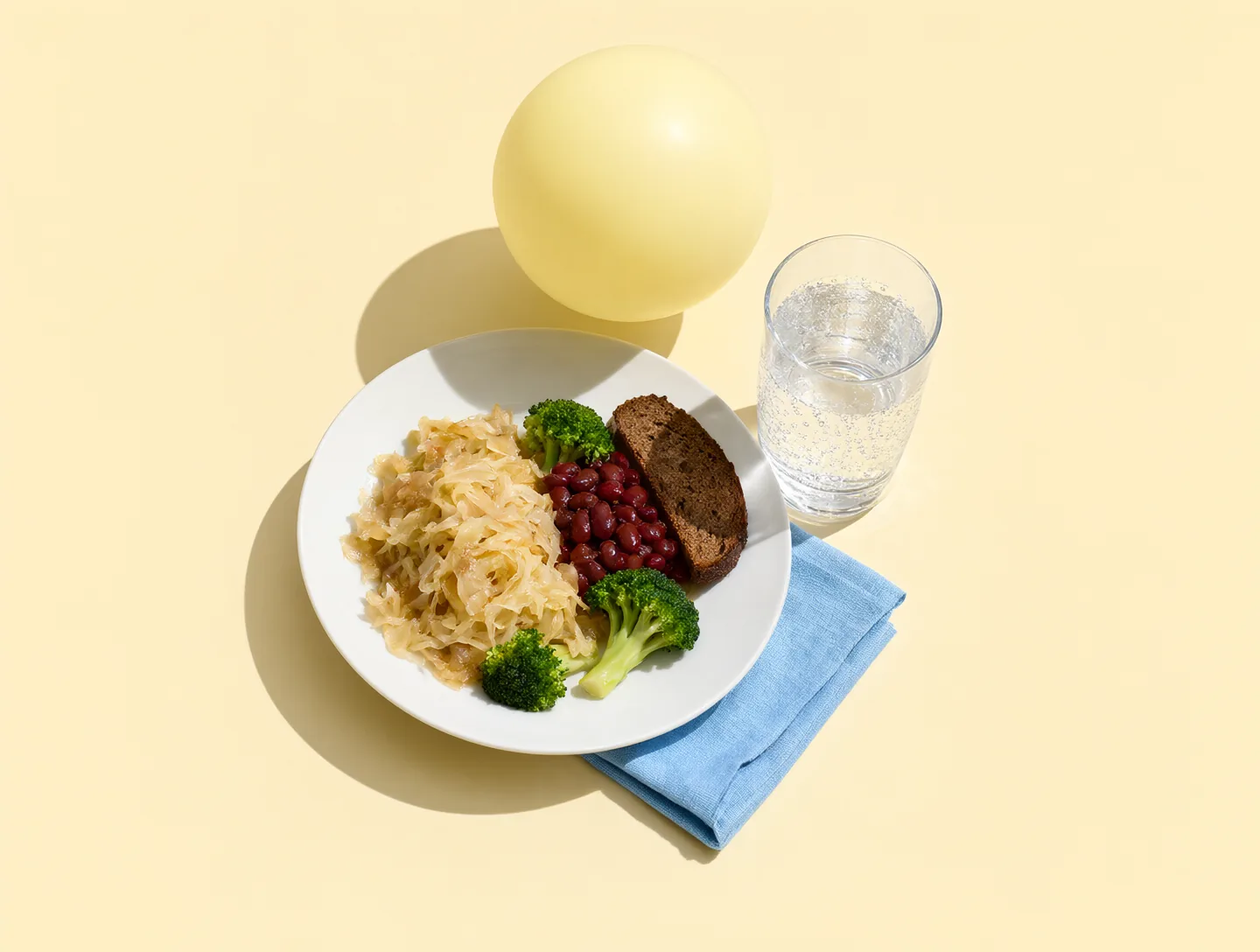
After salad, the belly grew by 35 millimeters, but there was barely any more gas
Lots of people know what bloating feels like. An international survey run by researchers from the Rome Foundation included answers from 51,425 people in 26 countries, and almost 18% of them had felt bloated at least once a week over the past three months. Women reported bloating about twice as often as men.
It usually seems that if your belly puffs up, there must be a lot of gas inside. Doctors at Vall d'Hebron Hospital in Barcelona decided to check. They did CT scans twice on twelve patients whose stomachs bloat after salad, once on a normal day and once during bloating.
During an episode, waist size went up by 35 millimeters on average. Gas in the colon went up by only 39 milliliters, and that difference wasn't significant. The diaphragm, the muscle between the chest and the belly, moved down by about 7 millimeters, and the usual contents of the belly shifted.
The authors themselves explain this kind of bloating by the walls of the belly not working together properly, not by gas. To understand what that means and what to do about it, let's first look at how much gas in the belly is normal.
What people say online
- “Any food gives me gas. My stomach is always big and bloated”
- “I'd often get told off about bloating at my ultrasounds, and sometimes it happens even when I haven't eaten anything that usually causes it”
- “I thought it was my appendix, turned out it was just gas”
- “Works for one person, does nothing for the next. It's like Russian roulette”
02What's normal
Is gas after eating normal? How many times a day healthy people pass gas
A 1996 U.S. study counted how many times a day people pass gas. Twenty-five healthy people ate as usual for a week, and they passed gas 10 times a day on average. The authors put the upper limit of normal at 20 times a day, and sex and age didn't change that number.
The amount of gas was measured in England. In a small 1991 experiment, 10 healthy volunteers passed between 476 and 1,491 milliliters of gas a day, usually about 705. They passed more gas after meals than at other times, and during sleep gas came out more slowly than during the day.
The experiment was small, and its number isn't a norm for everyone. But it shows the main thing. Healthy people get gas after eating, and it's a normal part of digestion.
At the same time, there isn't much gas in the gut itself. On CT scans of 37 healthy people, the gut usually held about 95 milliliters of gas, less than half a regular glass.
So gas after eating isn't a reason to worry on its own. We'll cover the signs that really do call for a doctor at the end of this article.
03Myths
What people say about bloating and gas, and what's actually known
- Myth
If your belly is bloated, it's full of gas
FactYour belly really does grow when you're bloated, you're not imagining it. But in most patients at the Barcelona hospital, extra gas couldn't explain the growth. We'll get into why below.
Source 06 - Myth
If you pass gas after eating, something's wrong with your gut
FactHealthy people get gas after eating too. As we said above, they pass gas 10 times a day on average, and the study authors put the upper limit of normal at 20.
Source 03 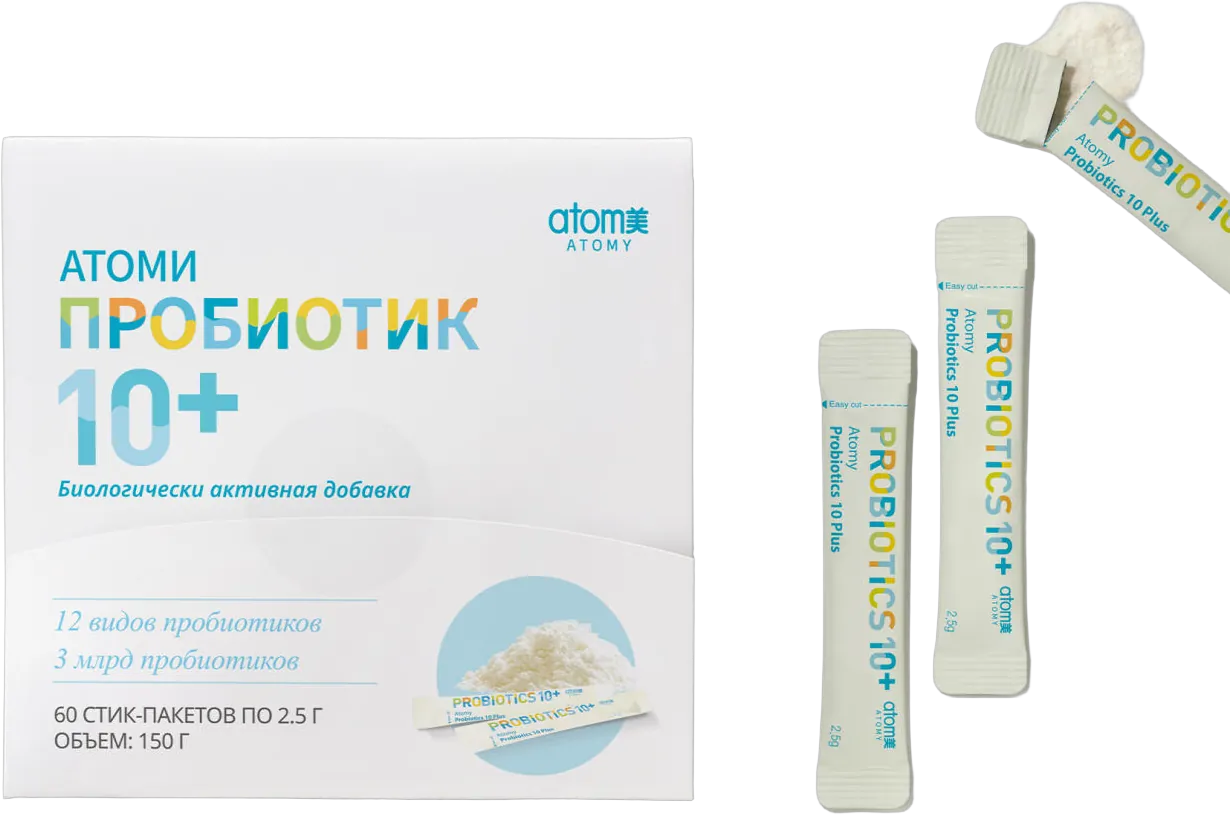 See the probiotic
- Myth
A probiotic will get rid of anyone's bloating
FactA U.S. trial took 302 people who felt bloated at least twice a week but hadn't gone to a doctor about it. Over 4 weeks, bloating got better both in those who took one specific probiotic (the B. infantis 35624 strain) and in those who got a placebo, and symptom severity at the end didn't differ. People taking the probiotic had more days without bloating.
Source 11 - Myth
Gas from a probiotic means your body is cleansing
FactThe sources we checked say nothing about cleansing. When it comes to gas, the U.S. National Center for Complementary and Integrative Health (NCCIH) writes not about the bacteria themselves but about prebiotics, which are food for good bacteria. In large doses, over 20 grams a day, they can cause gas and bloating. And inulin-type prebiotics made gas worse in people with irritable bowel syndrome (IBS). IBS is classed as a functional bowel disorder, and a doctor makes the diagnosis.
Source 12
If you're looking into probiotics, take a look at the probiotic page from our catalog. It has the ingredients and the description.
See the probiotic04Diaphragm
Why you bloat after eating even when there isn't much gas
The answer came from the doctors at Vall d'Hebron Hospital in Barcelona, whose experiment we started with. They pooled data on 139 patients who have episodes of visible bloating, when the belly gets noticeably bigger. Each one was examined twice, in their usual state and during an episode, and a tape measure confirmed the belly grew in 138 of them.
First the doctors checked the gas. CT scans were done on 104 patients, and in 99 of them the amount of gas in the gut stayed within 300 milliliters of their usual level. Only five had more gas, and their diaphragm moved down too.
What changed in most patients was how the diaphragm worked. On CT scans, it moved down in 82 of 103 patients, and recordings of muscle activity found it contracting in 34 of 35. When the diaphragm moves down, the usual contents of the belly get redistributed, and the belly wall pushes forward.
The authors' conclusion is simple. In these patients the belly really does get bigger, but for most of them extra gas isn't what explains it.
Extra gas does happen, though. In another study by the same doctors, about a quarter of patients had more gas than usual, or gas in an unusual place, during bloating or after gassy foods. So gas can't be ruled out completely. The UK's National Health Service (NHS) names a lot of gas in the gut as the most common cause of bloating in general. The Barcelona doctors, on the other hand, scanned people having episodes when the belly gets noticeably bigger.
In its review on bloating, the American Gastroenterological Association (AGA) writes that for this kind of glitch in how the belly muscles and diaphragm work, one of the options used is diaphragmatic breathing, a special type of breathing exercise. A doctor chooses the treatment.
05Fermentation
What foods make you bloated and where gas in the gut comes from
The gas that does form is made mostly by gut bacteria. In the same 1991 English experiment, the authors concluded that most of the gas comes from bacteria fermenting leftover food. When the volunteers ate food without fiber for two days, they usually passed about 214 milliliters of gas a day instead of the earlier 705.
How much gas you get also depends on the bacteria themselves. The authors of the 1996 U.S. study explain the differences between people this way. Different people's bacteria make different amounts of gas from the same fermentable food. Lactulose is a sugar the gut doesn't absorb. When participants ate 10 grams of it a day, they passed gas 19 times a day on average instead of 10.
Doctors use one word for these fermentable sugars, FODMAP. It's an acronym for fermentable oligosaccharides, disaccharides, monosaccharides and polyols, which are different kinds of sugars.
The Spanish doctors from the start of this article tested the foods themselves too. In a test tube, they gave human gut bacteria salad, beans and meat. The bacteria made about as much gas from salad as from meat, and 78% less than from beans. This was a test-tube experiment, and we don't apply it directly to people.
The NHS names some vegetables, fizzy drinks and air you swallow while eating as causes of gas. In Dutch measurements of 20 healthy volunteers, some air got into the stomach with every swallow, and the more often they swallowed air, the bigger the air bubble in the stomach was after a meal.
In a Japanese experiment, 19 healthy young women drank 250 milliliters of plain or carbonated water, and they felt fuller after the carbonated water than after the plain.
We'll talk about gut bacteria and probiotics below. The full list of ingredients in the probiotic from our catalog, from lactic acid bacteria and prebiotics to ginger and licorice, is on its page.
See the probiotic06The debate
Do probiotics help with bloating, and why doctors disagree
According to the International Scientific Association for Probiotics and Prebiotics (ISAPP), probiotics are live microorganisms that benefit health when taken in adequate amounts. But when it comes to whether they help with bloating specifically, medical societies give different answers today.
The World Gastroenterology Organisation (WGO) writes in its 2023 guidelines that less bloating and gas with probiotics is a consistent finding in published studies.
The American Gastroenterological Association (AGA), in a 2023 review, advises against using probiotics to treat bloating and abdominal distension. This is expert opinion, not a conclusion drawn from pooled trials. The American College of Gastroenterology (ACG) also advises against using probiotics for the overall symptoms of irritable bowel syndrome (IBS).
Why experts disagree is easy to see in a 2020 AGA technical review. The 55 IBS trials included 5,301 patients and tested 44 different probiotics or combinations. For most probiotics, all the evidence comes down to one trial. The authors write that no strain has been studied rigorously enough, but a possible benefit can't be ruled out either.
Large pooled analyses of trials say the same thing. In an analysis of 82 trials with 10,332 IBS patients, certainty that probiotic combinations and Bacillus strains help with bloating was rated very low. A review of 27 such analyses in IBS found a small or inconsistent effect on bloating, and side effects were as common as with a placebo.
There's one more reason for the debate. The AGA guidelines say that even within one species, different strains can act in completely different ways, and the WGO asks not to combine data on different strains without a good reason. The result for one probiotic isn't carried over to another.
In its IBS guideline, the UK's National Institute for Health and Care Excellence (NICE) advises people who decide to try a probiotic to take it for at least 4 weeks, watch whether it has an effect, and stick to the dose the manufacturer recommends.
07What to do
What to do if you bloat after eating
Eat regularly and take your time
NICE advises people with IBS to eat regularly, take their time, not skip meals and not leave long gaps between them.
Chew with your mouth closed
The NHS advises this so you don't swallow air.
Eat smaller meals more often
The NHS advises eating smaller portions more often instead of big meals. That's especially easy to forget at a holiday dinner.
Drink less soda
The NHS lists fizzy drinks among the causes of gas, and NICE advises cutting back on fizzy drinks and alcohol.
Add oats
According to NICE, oats, like oatmeal or oat cereal, and flaxseed may work well for people with gas and bloating.
Do a low-FODMAP diet with a dietitian
Of the diets tested in more than one trial, only the low-FODMAP diet did better than regular eating for bloating in IBS. The AGA says this diet is best done with a dietitian.
What doctors say about probiotics
Doctors disagree about probiotics, and strains act differently. For people with IBS who decide to try one, NICE advises taking a probiotic for at least 4 weeks and watching whether it has an effect.
The probiotic page in our catalog has its ingredients and description. The sticks contain 12 types of lactic acid bacteria and prebiotics.
See the probiotic08Sources
What the sources actually say
Almost 18% of participants reported bloating, meaning they felt it at least once a week over the past 3 months. Women reported bloating about twice as often as men. The analysis included 51,425 people from 26 countries.
The clinical part included 12 patients who say their stomach bloats after salad. Waist size went up by 35 ± 3 mm with no significant increase in colon gas (an increase of 39 ± 4 mL). The belly growth was linked to the diaphragm moving down by 7 ± 3 mm and the usual contents of the belly being redistributed, and it is caused by the walls of the belly not working together properly. In a test tube, bacteria made as much gas from salad as from meat, and 78 ± 15% less than from beans.
25 healthy people on their usual diet for a week passed gas 10 ± 1 times a day, with the upper limit of normal at 20 times a day. With 10 g of lactulose a day, the number went up to 19 ± 2.4 times. Sex and age had no effect. Different people's bacteria make different amounts of gas from the same amount of fermentable food.
In 10 healthy volunteers, daily gas volume ranged from 476 to 1,491 mL (median 705 mL). More gas was passed after meals, and less during sleep than during the day. Most of the normal volume comes from fermentation gases. A fiber-free diet for 48 hours cut the daily volume to 214 mL.
- See the probiotic
In 37 healthy people, CT showed 95 mL of gas in the gut (71 to 141 mL). During a bloating episode or after gassy foods, about a quarter of patients had more gas and/or gas in an unusual place.
Patients were examined in their usual state and during an episode of visible abdominal distension. Waist size grew in 138 of 139. On CT, gas stayed within ±300 mL of the usual level in 99 patients and was higher in 5, whose diaphragm also moved down. Diaphragm contraction was found in 34 of 35 by electromyography and in 82 of 103 by CT. The complaint is objectively confirmed, and the increase in gas doesn't explain the visible belly growth.
Probiotics should not be used to treat bloating and abdominal distension. If a change in diet is needed, such as a low-FODMAP diet (fermentable oligosaccharides, disaccharides, monosaccharides and polyols), it is best guided by a dietitian. Diaphragmatic breathing is used for abdominophrenic dyssynergia. No systematic reviews were done, and the advice has no formal rating of evidence quality.
According to the NHS, the most common cause of bloating is a lot of gas in the gut. It can be caused by some vegetables and fizzy drinks or by air swallowed while eating. Chew with your mouth closed and eat smaller meals more often. See a doctor if bloating comes with unintentional weight loss or blood in your stool. Bloating that doesn't go away can sometimes be a sign of something more serious.
- See the probiotic
In 20 healthy volunteers, some air got into the stomach with every swallow. How often they swallowed air was linked to the size of the air bubble in the stomach after a meal.
19 healthy young women drank 250 mL of plain or carbonated water. After the carbonated water, fullness ratings were significantly higher.
302 people with discomfort and bloating at least 2 times a week who hadn't seen a doctor about it in the past 12 months. Over 4 weeks, discomfort and bloating scores improved significantly in both groups. Severity at the end didn't differ between the probiotic B. infantis 35624 and placebo. The probiotic group had more days without bloating.
Prebiotics in large doses (over 20 grams a day for an adult) can cause gas, bloating, belly pain, cramps and diarrhea. Inulin-type prebiotics made gas worse in people with IBS. American College of Gastroenterology clinical guidelines advise against using probiotics to treat overall IBS symptoms. The benefit isn't conclusively proven, and not all probiotics work the same way.
- See the probiotic
A prebiotic is a substance that is selectively used by host microorganisms and benefits health.
Probiotics are live microorganisms that, when given in adequate amounts, benefit the health of the host.
Less bloating and gas with probiotic treatment is called a consistent finding of published studies. The effects of specific strains on IBS symptoms are shown in tables. Data on different strains shouldn't be combined without a reason to assume a shared mechanism.
The 55 IBS trials included 5,301 patients. They tested 44 different species, strains or combinations of probiotics, so for most probiotics all the evidence comes down to one trial. No strain or combination has been studied rigorously enough, but a possible benefit can't be ruled out.
- See the probiotic
Within one species, different strains can act in completely different ways.
82 trials, 10,332 patients. For bloating and abdominal distension, certainty of benefit from probiotic combinations and Bacillus strains is very low.
27 systematic reviews. Probiotics were linked to a small or inconsistent effect on bloating, and side effects were as common as with a placebo.
Eat regularly and take your time, don't skip meals and don't leave long gaps between them. Drink less alcohol and fewer fizzy drinks. Oats and flaxseed may help people with gas and bloating. People with IBS who decide to try probiotics are advised to take the product for at least 4 weeks while watching for an effect, at the dose the manufacturer recommends.
- See the probiotic
28 trials, 2,338 IBS patients, 11 diets. For bloating and abdominal distension, counting only diets studied in more than one trial, only the low-FODMAP diet (23 trials) did better than regular eating.
Carry out tests if a woman reports persistent or frequent abdominal distension (often called bloating), particularly more than 12 times a month, especially if she is 50 or older.
09Products
A probiotic from our catalog
 R00164
Atomy Probiotics 10+
12 types of lactic acid bacteria and prebiotics in handy stick packs. Check the label for ingredients.
Dietary supplement. Not a medicine
Description from the product page on atomy.ru
Learn more
10Sign up
If you decide to buy, choose the country where you live
Sign-up and purchase happen on the Atomy website; we do not sell products, and Yandex Metrica counts visits only if you agree.